
Find People Through Chino Records
A Chino people search should start with the record type that matches the fact you already know. A full name points toward recorded documents, court cases, professional licenses, business filings, staff directories, and voter self-service tools. An address points toward the assessor parcel record, GIS, recorder documents, tax records, permits, and older reverse directories. A family event points toward vital records, probate, obituaries, cemetery data, and library or archive collections.
Chino is a city, but most official people records are county or state systems. The San Bernardino County Assessor-Recorder-County Clerk handles deeds, liens, marriage, fictitious business names, assessor facts, and many copies. The Superior Court handles civil, probate, family, criminal, traffic, and small claims case records. The city adds municipal context through the City Clerk, Community Development, Police Department, and staff directory.
- Start with the strongest clue: full name, address, APN, business name, case number, or event date.
- Use the county recorder or assessor when land, ownership, mailing address, or transfer history is involved.
- Search the San Bernardino County Superior Court portal when the clue is a dispute, estate, judgment, or case number.
- Use city records when the person appears in a permit, agenda packet, city election file, public comment, or local report.
- Move to library, archive, obituary, and historical directories when the person lived in Chino before modern online systems.
Chino People Search Offices
The office split matters. The county recorder is a party-name index for deeds, liens, maps, releases, notices, and related official records. The assessor is the address-to-owner trail through APN, situs address, mailing address, valuation, and transfer clues. The County Clerk keeps marriage and fictitious business name channels. City Clerk records fill a different role: municipal agendas, minutes, contracts, campaign filings, boards, claims, and public records requests.
The San Bernardino County Official Records page is the recorder entry point for Chino deed and recorded-document work. The screenshot below shows the official source a reader should use before relying on a copied index.
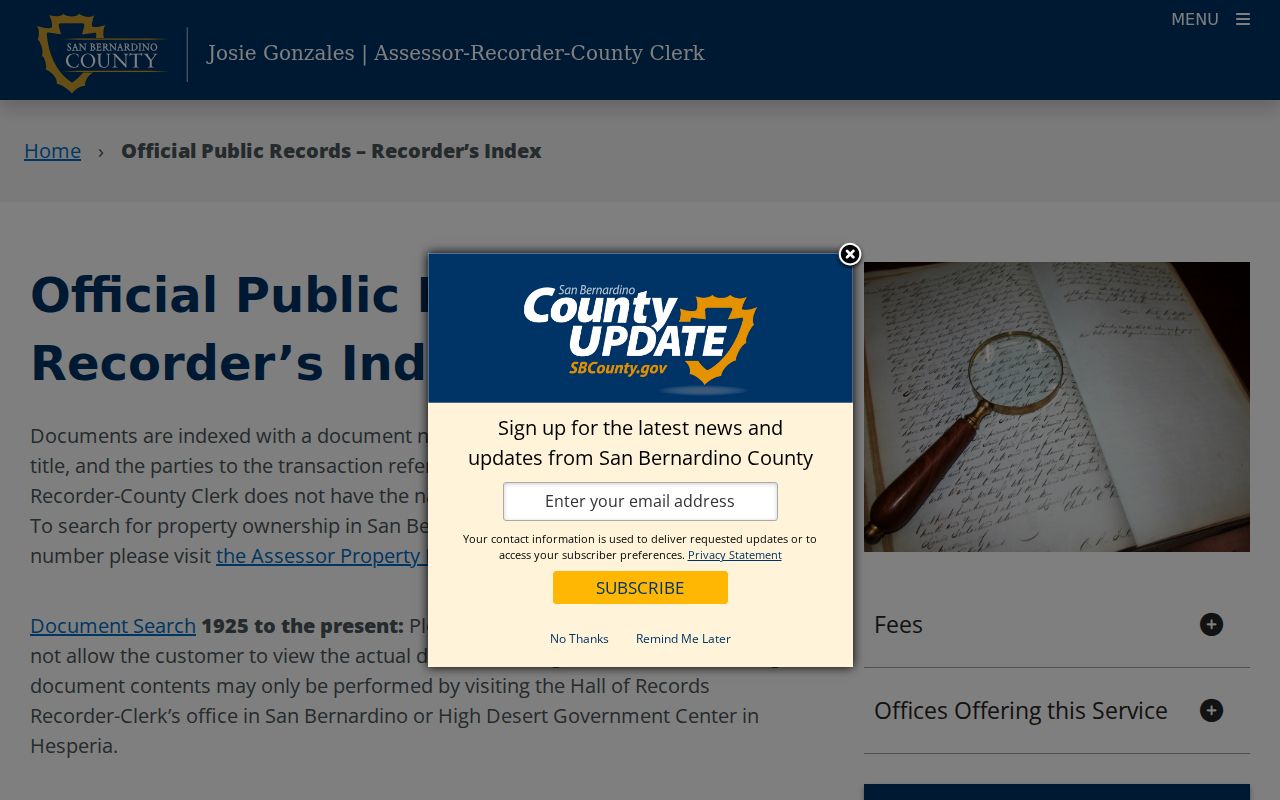
That office is useful when a name appears as grantor, grantee, borrower, trustee, lien claimant, business party, or document signer. It is not a complete person finder, so assessor, court, city, and archive records often have to fill in the gaps.
San Bernardino County Recorder
Assessor-Recorder-County Clerk
Countywide Chino recorded documents
San Bernardino County Assessor
Parcel and assessment records
APN, situs, mailing, value, and owner clues
City of Chino City Clerk
Municipal records custodian
Agendas, minutes, CPRA routing, local election files
Chino ARC Portal Clues
San Bernardino County's ARC online services are the main gateway for Chino property and recorded-record searches. A name search in the recorder index can show parties to recorded documents. An address or APN route can point to the parcel record, then back to the deed chain. When a portal screen does not expose owner-name search, the APN and address can still lead to useful public facts.
The ARC online services entry is the county doorway for the record systems most often used in a Chino people search.
Use the county portal as an index first, then request the document image, certified copy, or office help when an entry needs proof. Exact online start years were not confirmed in the static research, so older Chino documents may require the ARC office, archive, or microfilm route.
| ARC path | Best clue | What it can reveal |
|---|---|---|
| Recorder official records | Name, document number, date, book/page | Grantor, grantee, instrument type, record date, copy link where available |
| Assessor property data | APN or situs address | Owner, mailing address, assessed value, transfer clues, legal description |
| County clerk records | Marriage or business-name clue | Marriage, fictitious business name, notary, and related clerk filings |
Chino Address to Owner Search
Property records are the strongest official address trail. The assessor's situs address is the physical Chino property. The mailing address can point to a nonresident owner, trust contact, business address, or other mailing agent. The APN is the stable key that links assessor records, tax records, GIS, permits, and recorded documents even when a street name is abbreviated or entered differently.
For the property side of a Chino people search, define the terms early.
- Situs address
- The physical parcel location in or near Chino.
- Mailing address
- The place where assessment or tax mail is sent, often the best lead for a nonresident owner.
- APN
- The assessor parcel number used across county property, tax, GIS, and many permit records.
- Legal description
- The lot, tract, or metes-and-bounds language that ties older deeds and maps together.
Note: A Chino mailing address is a clue, not proof that City of Chino records hold the file; county parcel data is the jurisdiction check.
Search Chino Court Names
Chino cases route through the Superior Court of California, County of San Bernardino. The court's public case information and document-sales channel can identify party names, case numbers, filing dates, division, courthouse, events, judgments, hearing dates, and document lists when those details are public. Probate is especially useful for heir and family research because petitions can name decedents, personal representatives, relatives, addresses, estate property, and hearing dates.
The San Bernardino Superior Court case information page explains the online court case and document route used for Chino court-name checks.
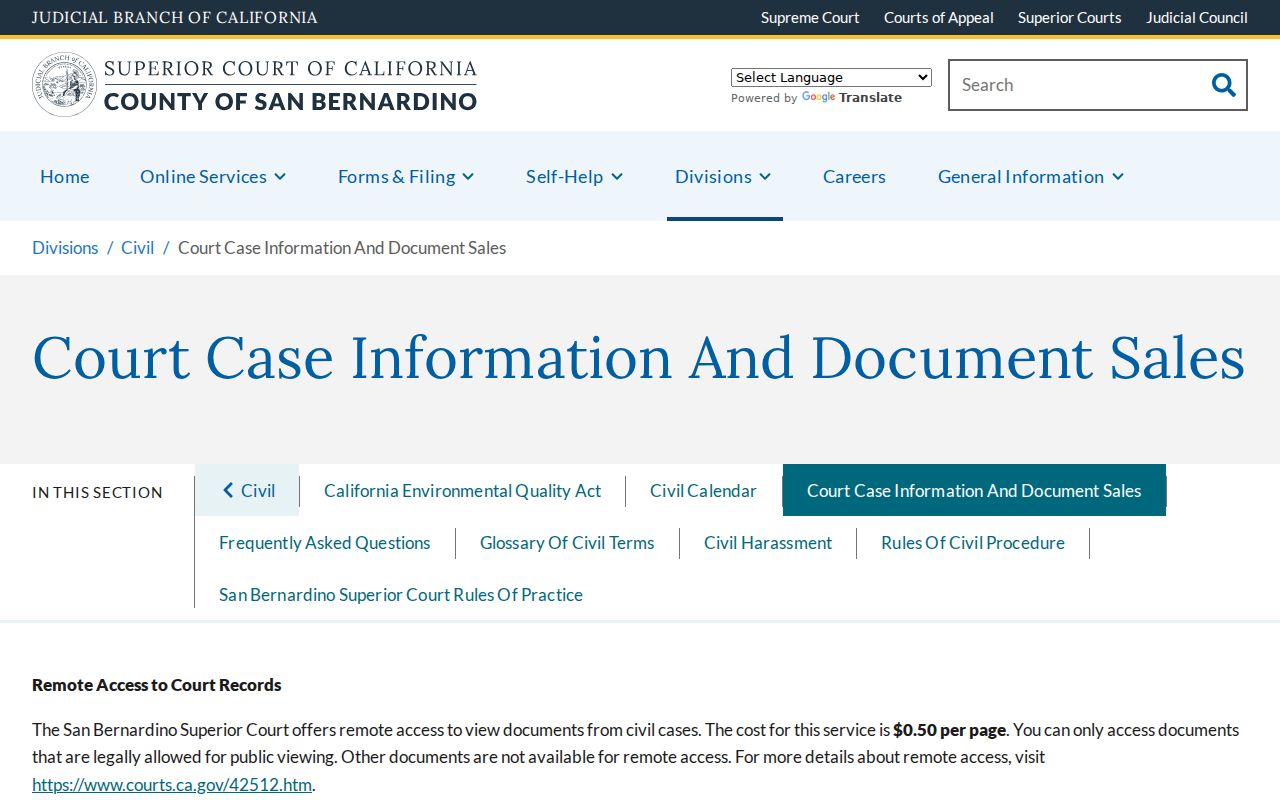
Use the online portal for the first pass, then contact the court clerk for older files, copy questions, public terminals, or cases with restricted online detail. Juvenile, sealed, adoption, certain family, victim-sensitive, medical, and expunged details can be absent or closed.
| Search field | Use it for | Notes |
|---|---|---|
| Case number | Exact match | Best when a citation, filing, or notice already gives the number. |
| Party name | Name lookup | Common surnames need date, division, or case-type narrowing. |
| Case type | Civil, probate, family, criminal, small claims, traffic | Public access varies sharply by division. |
| Filing date range | Recent or time-limited events | Useful when the name is common. |
City Files Naming Chino People
City records help when the person appears in a municipal role rather than a county record. A name may show up as a permit applicant, property owner in a planning file, contractor contact, board member, public speaker, campaign filer, city employee, police-report requester, or party in city correspondence. A pure name request may miss records because many city files are indexed by address, project, permit number, agenda item, department, or date range.
The Chino City Clerk page is the local route for city records, elections, agendas, minutes, and public records requests.
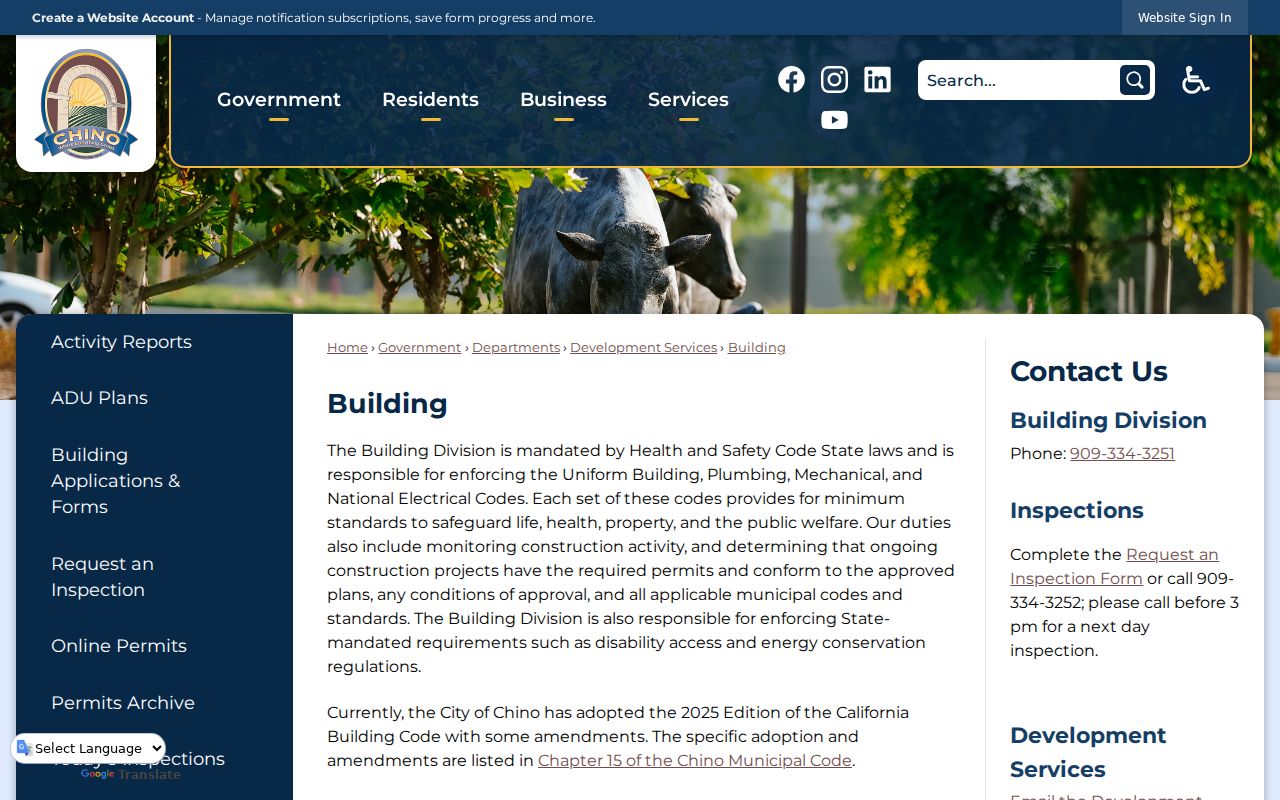
City records do not replace county deeds, county court files, jail records, vital records, or voter records. They add the local layer that county systems often miss.
Search tip. For Chino City Clerk or permit records, ask by address, APN, agenda item, project name, permit number, or date range before relying on a name alone.
Chino Vital Record Paths
Birth and death events in San Bernardino County route through the county Department of Public Health Vital Statistics and the California Department of Public Health for statewide certified-copy rules. Marriage licenses and certificates route through the San Bernardino County Clerk/Recorder. Divorce starts as a Superior Court case, while state vital-record channels may supply certain certificate or letter products under California rules.
California separates authorized certified copies from informational certified copies. An authorized copy is limited to eligible requesters and may require a sworn statement. An informational copy can serve genealogy or reference use, but it is marked as not valid to establish identity. Public indexes can prove that an event occurred without opening the full certificate to every requester.
For deceased people, combine death records, obituaries, cemetery entries, probate cases, and recorded property transfers. That mix can identify relatives, prior residences, estate contacts, and record dates without treating a restricted certificate as an open document.
Chino Voter Lookup Limits
Voter registration is useful, but it is not a general public directory. The statewide My Voter Status tool is built for self-service checks and requires identifying inputs. The San Bernardino County Registrar of Voters manages local registration, precinct, district, vote-by-mail, election result, candidate, and voter-file request functions for Chino voters.
The California My Voter Status lookup is the state self-check tool for voter status, ballot, and polling-place information.
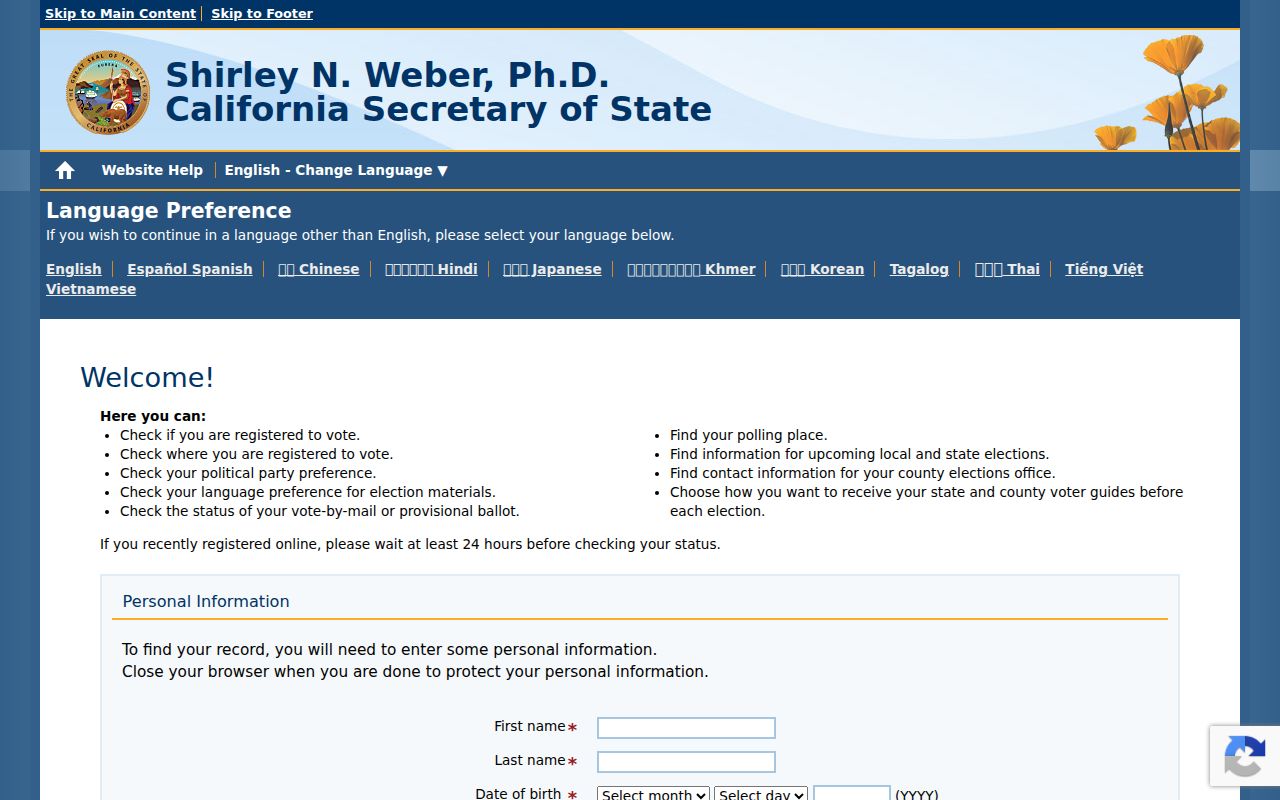
California Elections Code section 2194 limits voter registration information to election, scholarly, journalistic, political, or governmental purposes as allowed by law. Signatures, identification numbers, full birth dates, protected addresses, and Safe at Home information are not general search data.
Chino Staff Directory Names
Directories are best when the target appears in a public role. The City of Chino staff directory lists public-facing city departments and employee contacts, not private residents. It can confirm a work role, department, phone, and email link where published. Chino Valley Unified School District, Chaffey College, state agencies, professional boards, and local business groups provide different directory slices.
The City of Chino staff directory shows how a public staff directory can be searched by department, name, or keyword.
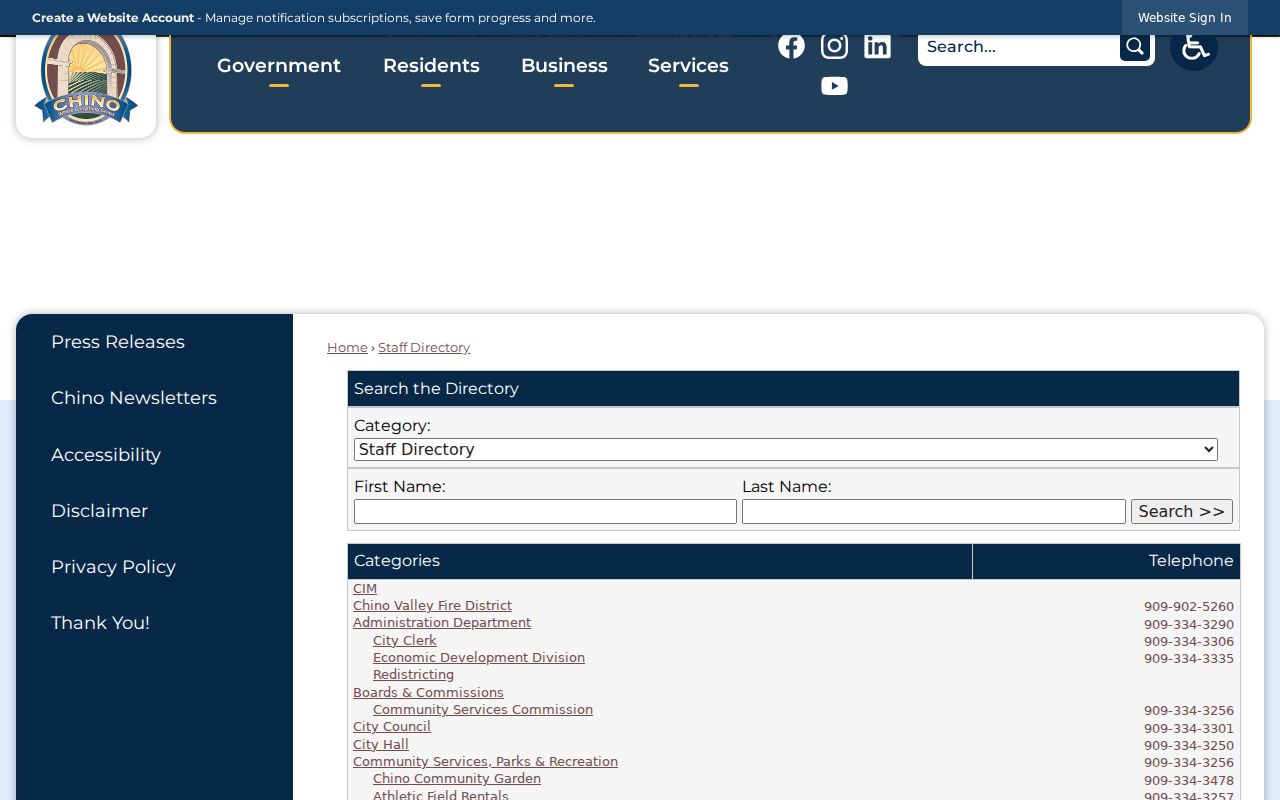
Use directories as confirmation of a public role, not as proof of private residence. The deeper directory-by-directory treatment belongs on the Chino people directories page.
Business Owners in Chino Searches
Business and license lookups help when the person is connected to a company, professional service, trade, real estate license, contractor license, local DBA, or public business address. The California Secretary of State business search can show entity names, status, agent for service, addresses, filing history, and officers or managers when filings provide them. County fictitious business name records can add local DBA context.
The California Secretary of State business search is a statewide entry point for business-entity name checks tied to Chino people and companies.
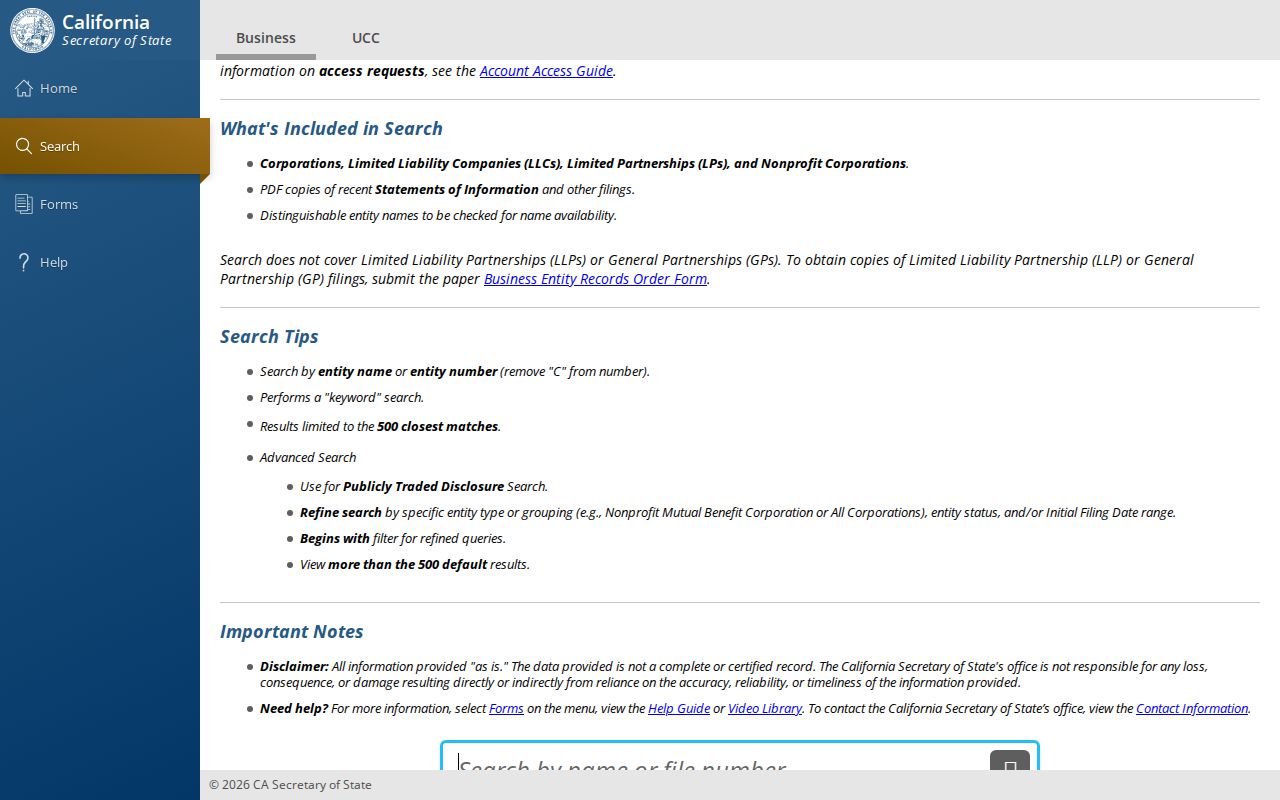
Business records often list agents, mailing addresses, entity status, and filing dates. They should be matched against property, court, license, and city permit records before drawing conclusions from one filing.
Chino License Search Trails
The California Department of Consumer Affairs license search and separate board portals can identify people by name, license number, board, city, county, status, issue or expiration dates, and discipline links where a board publishes them. Contractors, real estate professionals, attorneys, medical licensees, and other regulated roles may appear in state systems even when no city directory lists them.
The DCA license search is the broad state professional-license search used for many Chino name and business checks.
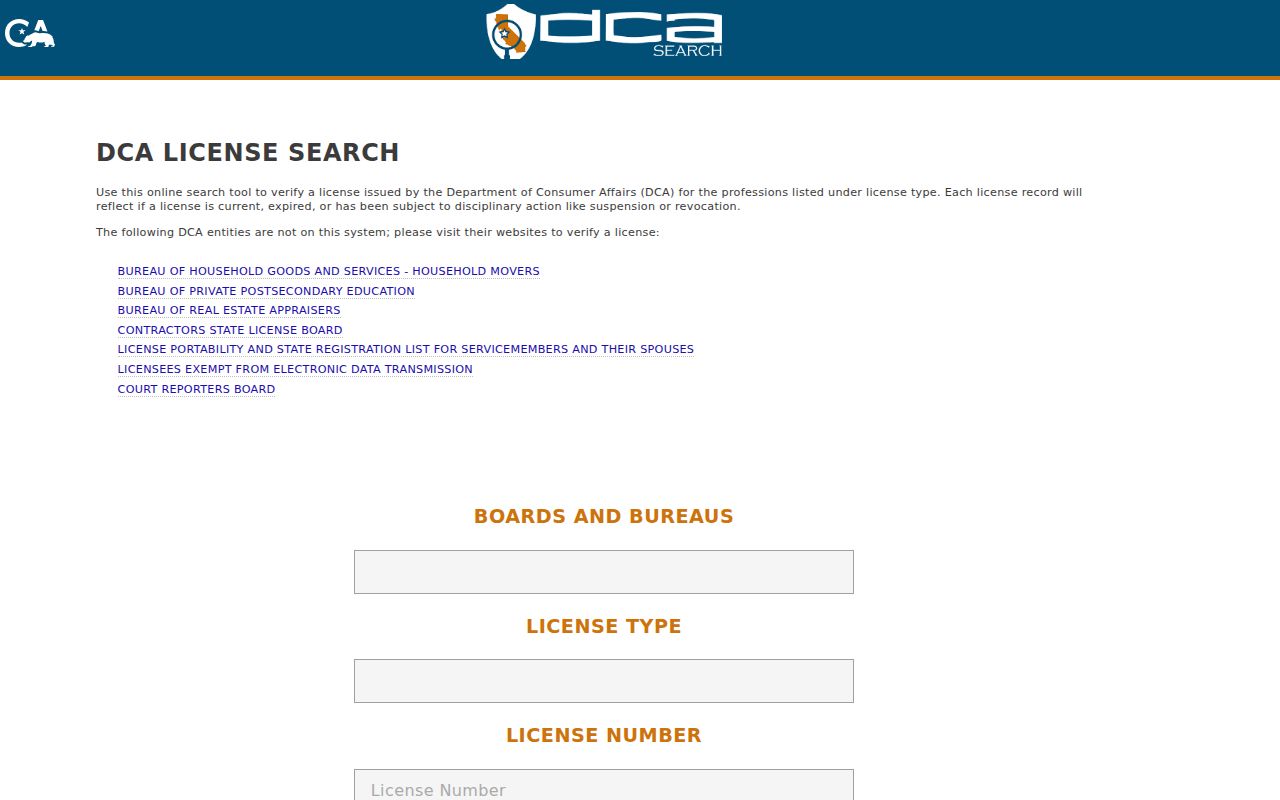
Professional records are best for confirming public license status or a business address. They do not identify every resident and should be checked against the board that owns the license.
| Lookup | Useful field | Possible public result |
|---|---|---|
| DCA License Search | Name, license number, board, city | Status, issue or expiration date, board, discipline links where available |
| CSLB License Check | License, business name, personnel | Contractor classification, bond, status, personnel |
| State Bar Attorney Search | Name or bar number | Attorney status, admission, discipline, public contact |
| DRE License Lookup | Name or license number | Broker or salesperson status and license dates |
Older Chino Name Trails
Historical Chino research often requires regional terms. Older records may identify the same family by Rancho Santa Ana del Chino, rural route, township, county precinct, Ontario-area, Pomona Valley, Chino Valley, or modern subdivision labels. A Chino people search for a past resident should combine census records, reverse directories, newspapers, probate, deeds, cemetery records, school publications, and library databases.
The county library system, FamilySearch catalog, California State Archives, and regional repositories can point to city directories, phone books, yearbooks, newspapers, local-history files, and county records. Exact Chino directory publishers and year runs were not confirmed in the static research, so the best claim is the contact route, not invented holdings.
| Era | Search trail | Why it helps |
|---|---|---|
| Rancho and early county | Land grants, maps, deeds, court records, church records | Names may predate modern Chino labels. |
| Late 1800s and early 1900s | Census, voter registers, probate, newspapers, cemetery records | Useful for family and heir research. |
| Mid-1900s | Phone books, yearbooks, local papers, marriage and death indexes | Connects residence, school, spouse, and occupation clues. |
| Current era | Recorder, assessor, court, license, voter self-service, city records | Best for recent official name and address trails. |
California Privacy Boundaries
California record access has firm limits. Safe at Home can shield actual addresses for qualifying protected people. Recent vital records use authorized and informational copy rules. Voter files withhold signatures, identification numbers, full birth dates, and protected addresses. Courts restrict sealed, juvenile, adoption, medical, and sensitive family matters. DMV-origin personal data is not a general people-search source.
Commercial people-finder profiles are a different category from official records. They may be fast, but they can be stale, duplicated, inferred, or wrong. Official records require office-specific redaction or confidentiality rules, while commercial opt-outs run through privacy and data-broker procedures. California CCPA/CPRA rights and data-broker rules are tracked by the Attorney General and California Privacy Protection Agency.
Use records lawfully. Chino records can support genealogy, reconnecting, estate research, consumer safety, and civic transparency. Do not use addresses or personal details to stalk, harass, threaten, impersonate, or harm anyone.