
Chino Open Records Inventory
Open records for Chino split across city, county, state, and federal systems. The City of Chino keeps municipal files. San Bernardino County keeps the largest local record sets for land, assessment, clerk filings, court cases, elections, sheriff custody, and many copy services. California agencies hold statewide vital-record rules, business filings, professional licenses, prison locator data, privacy programs, and data rights.
| Record Set | Custodian | Online Index | Access |
|---|---|---|---|
| Deeds, liens, maps, notices | San Bernardino County Assessor-Recorder-County Clerk | ARC official records | Public index; images and certified copies may require payment. Exact online start year was not verified. |
| Parcel and assessment data | San Bernardino County Assessor | Assessor property information | Public parcel lookup; owner-name access may be limited by portal design. |
| Civil, probate, family, criminal, traffic | San Bernardino County Superior Court | Court case information and document sales | Public case access varies by division; sealed and confidential files are restricted. |
| Birth, death, marriage, divorce | County Vital Statistics, County Clerk/Recorder, CDPH, Superior Court | Forms and limited indexes | Authorized and informational copy rules apply. |
| Voter registration data | San Bernardino County Registrar of Voters and California SOS | My Voter Status and file request channels | Restricted-use voter data with confidential fields withheld. |
| Jail, prison, registry records | Sheriff, CDCR, California DOJ | Official custody and registry tools | Public locator data with safety and privacy limits. |
| City records and permits | City of Chino departments | City Clerk, agendas, department request routes | CPRA request channel; exemptions and redactions may apply. |
Not every public index is a public copy service. A name can appear in an index while the image, certified copy, or full file remains fee-based, eligibility-controlled, sealed, or redacted. Juvenile matters, adoption records, protected addresses, DMV-origin data, some law-enforcement records, military discharge filings, and recent authorized vital-record copies have separate access limits.
Chino Records Are County-Led
The main record trail for Chino runs through San Bernardino County. The combined Assessor-Recorder-County Clerk office is the key local custodian for recorded documents, parcel facts, marriage services, fictitious business names, notary filings, and many certified-copy channels. That office structure matters because one search field rarely covers the whole system. A deed search may find parties to a transfer, while an assessor search may point to the current assessed owner and mailing address.
City records are narrower but still useful. The City Clerk is the municipal custodian for agendas, minutes, ordinances, resolutions, contracts, claims, local election files, and CPRA routing. Community Development can hold permits, planning files, project addresses, APNs, applicants, and contractor references. Chino Police report access is handled through the police records route and is not an open name directory.
Jurisdiction check. A Chino mailing address does not prove the City of Chino holds the record. Use the APN, assessor record, city boundary, or county GIS context before sending a request.
Chino Public Records Offices
Use the office that actually holds the record. County land records, county clerk filings, court files, city files, and state vital records are separate channels. If the portal does not answer the question, the same office is usually the right copy or request contact.
Assessor-Recorder-County Clerk
San Bernardino County recorder, clerk, and assessor services
Chino City Clerk
Municipal records, agendas, ordinances, elections, and CPRA routing
County Vital Statistics
Birth and death registration, with state and recorder copy paths
California CPRA Request Rules
The California Public Records Act, Government Code section 7920.000 et seq., applies to state and local agencies. Any person may request identifiable records unless an exemption or separate confidentiality law applies. Agencies generally must make a determination within 10 days after receiving a request. They may take a 14-day extension for unusual circumstances.
Copy charges are different from search time. Agencies can charge direct duplication costs and fees authorized by statute, but the research did not identify a general rule letting agencies charge ordinary review time for every CPRA request. Redactions should be tied to law. The California Attorney General’s CPRA guide is the best state-level starting point for the request framework, while California legislative code lookup is the official code source.
The Attorney General CPRA screenshot in the manifest comes from the official state guide: California Attorney General CPRA guide.
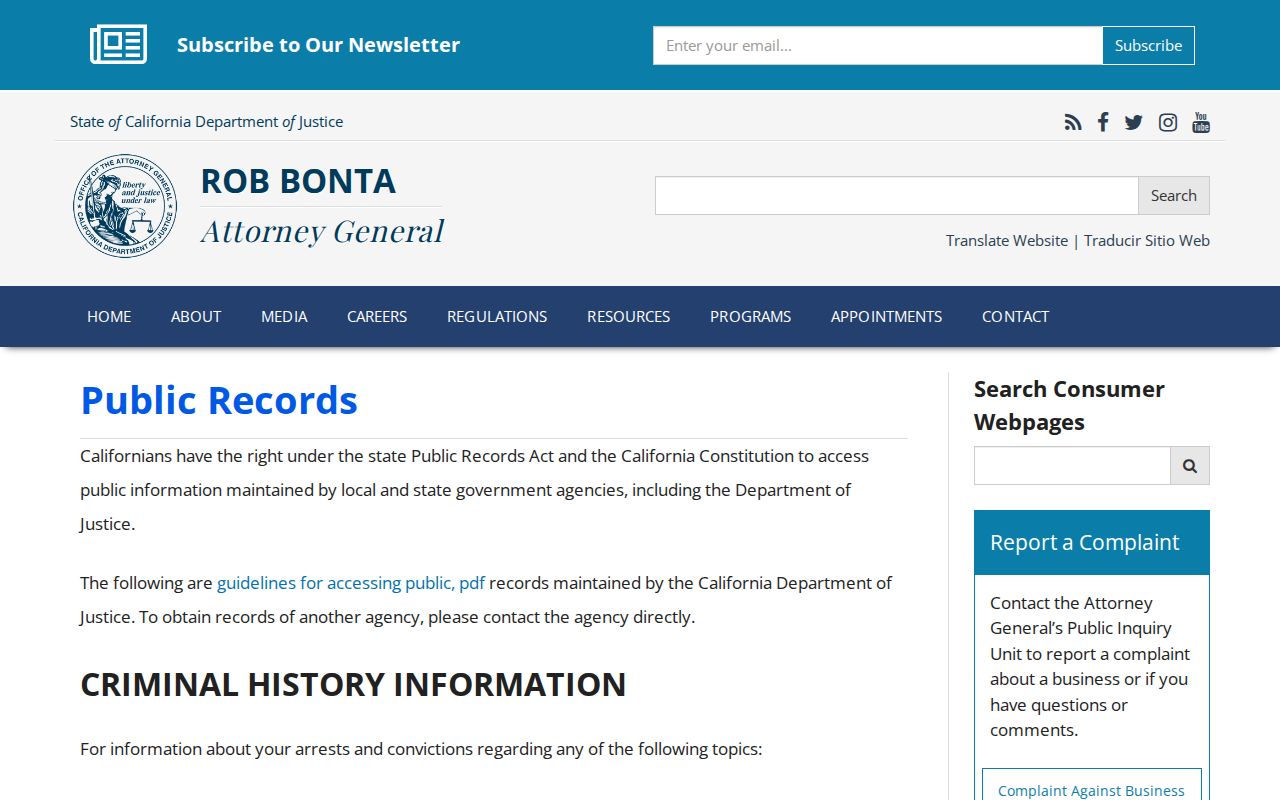
That state source is useful when a Chino request must be narrowed, redirected, delayed, or redacted by a public agency.
San Bernardino Recorder Records
The county recorder index is a legal-document index, not a complete people finder. It helps when a person bought, sold, financed, inherited, mapped, or encumbered real property, or appeared in another recorded filing. For Chino, recorder records can connect names to parcels, dates, lenders, trusts, businesses, liens, notices, and prior owners. Older records, images, or certified copies may require the ARC portal, a paid copy order, or office contact.
Use the San Bernardino County Official Records page for recorder services. The static research did not confirm the exact online index start year, so do not assume all older Chino deeds are searchable online.
| Field | Type | Required | Format Notes |
|---|---|---|---|
| Name or party name | Text | Usually no | Search grantor, grantee, indexed party, surname, initials, and business variants. |
| Document number | Text | No | Best when an instrument number is known. |
| Recording date range | Date pair | No | Useful for common names and known sale periods. |
| Document type | Filter | No | Deeds, deeds of trust, liens, maps, notices, releases, and related filings. |
| Book and page | Text pair | No | Helpful for older citations from title records. |
| APN or legal description | Text | No | Availability depends on how the portal indexed the document. |
Chino Assessor Records
Assessor and tax records are the strongest official address trail for Chino property. The assessor record can distinguish the situs address, meaning the physical property, from the mailing address used for assessment mail. That split is often the best lead when the assessed owner lives elsewhere or when the property is held by a trust, LLC, or other entity.
The county assessor information page routes users toward parcel and assessment data. Search by APN or street address when possible. Owner-name searching may be more limited than parcel or address searching, so the recorder index is the better fallback for historical grantor and grantee names. Tax bills, payment status, and tax-defaulted property information route through the county tax collector rather than the city.
Record Terms
- Index
- A searchable pointer to a record, often showing names, dates, and numbers without the full image.
- Certified copy
- An official copy marked by the custodian, often needed when a plain copy will not suffice.
- Custodian
- The agency or office legally responsible for keeping and releasing a record.
- Exemption
- A law that allows or requires an agency to withhold or redact part of a record.
- Situs address
- The physical property location, separate from the owner mailing address.
Chino Court Record Access
Chino cases are handled by the Superior Court of California, County of San Bernardino. There is no separate city court for general case files. Civil, small claims, probate, family, criminal, traffic, and other case types use Superior Court systems, with public access varying by division, filing date, file status, and confidentiality rule. Probate is often useful for heir and estate questions because petitions may name relatives, representatives, addresses, and property.
The court’s online case information and document-sales route can show case numbers, party names, filing dates, case type, courthouse or division, register of actions, hearing dates, dispositions, and document purchase links when public. Court indexes are not statewide criminal-history summaries. Sealed cases, juvenile matters, adoptions, family details, medical facts, victim identifiers, and restricted material may be absent.
Note: Clerk terminals may show older metadata or document lists that are not easy to see through the web portal.
Chino Vital Records Limits
Vital records follow California copy rules. Chino birth and death registration routes through San Bernardino County Department of Public Health Vital Statistics and state channels. Marriage licenses and certificates route through the county clerk and recorder. Divorce begins as a Superior Court dissolution file.
California separates authorized certified copies from informational certified copies under Health and Safety Code section 103526 and related rules. Authorized copies require a statutory relationship or qualifying role, and mailed requests commonly require a sworn statement and notarization. Informational copies may support genealogy or personal research, but they are marked as not valid to establish identity. Use the CDPH Vital Records site for statewide forms and the county office for local routing.
Copy eligibility. A public index mention does not make every certificate open to every requester. Choose the copy type before paying a fee.
Chino Jail And Registry Records
Law-enforcement lookups are official but narrow. The San Bernardino County Sheriff inmate locator focuses on current custody and related public booking information. CDCR handles the state prison locator. The California Megan’s Law registry is a state DOJ search with name, city, ZIP, address, radius, map, and terms acknowledgement. None replaces court dockets or police report requests.
The successful Sheriff screenshot comes from the official county locator: San Bernardino County Sheriff inmate locator.
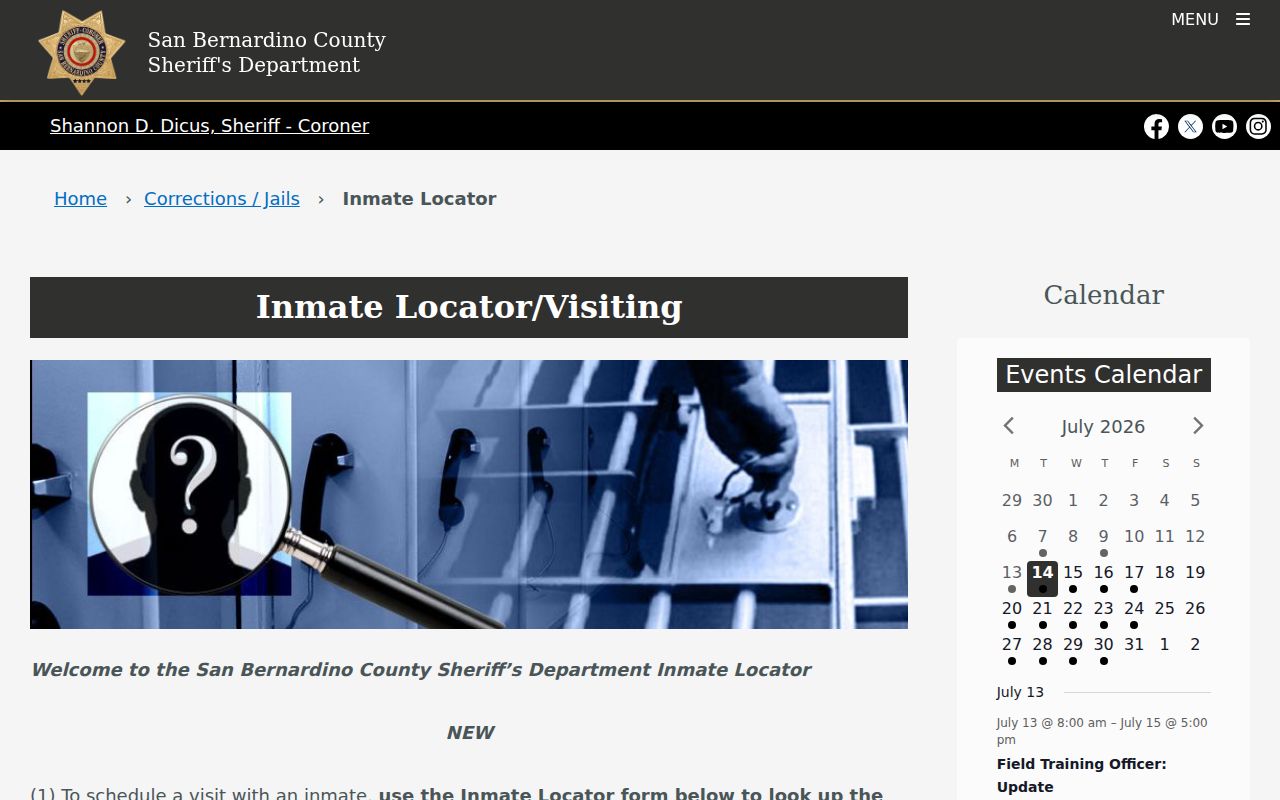
Use custody locator data as a point-in-time public record, then check the court case record for charges, hearings, and dispositions where public.
The registry screenshot comes from the state source: California Megan’s Law registry.
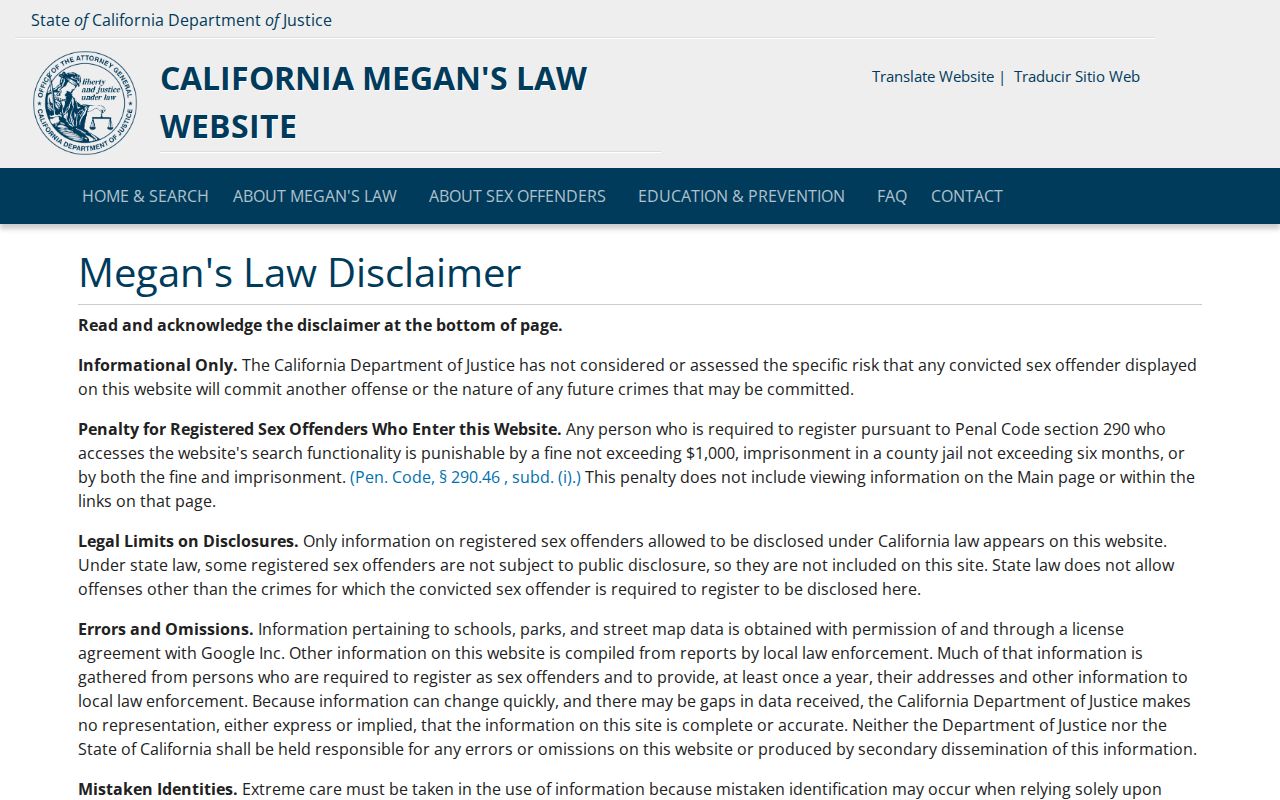
Registry use is subject to legal terms. Search results can be limited by state publication rules, address protections, and the level of public disclosure allowed for a registrant.
California Privacy Boundaries
California open records contain many redaction rules. Safe at Home can shield actual residence addresses for qualifying protected people and use a substitute address in government records. Voter files exclude or restrict driver license numbers, Social Security numbers, signatures, full birth dates, and protected addresses. Military discharge recordings receive special protection.
Official records and commercial data profiles are different systems. Removing a commercial profile does not erase county deeds, court records, assessor records, or voter records. Official records require a statutory redaction, confidentiality program, sealing order, or custodian process.
Request Chino Public Records
When a portal does not show the record, send a precise request to the custodian. California requests do not require special words, but they should describe identifiable records. Good details include names, date ranges, APN, address, case number, document number, permit number, agenda item, department, and whether a plain or certified copy is needed.
- Identify the custodian. Use ARC for deeds, assessor facts, clerk filings, and some copies; use Superior Court for case files; use the City Clerk for municipal records.
- Check the official portal first. Capture record numbers, document dates, APNs, case numbers, and exact names before asking staff to pull copies.
- Submit a focused request. Ask for records by type, date range, address, parcel, case, permit, agenda item, or department rather than a broad name-only sweep.
- Choose the copy type. Plain copies, certified copies, informational vital copies, and authorized vital copies follow different rules and fees.
- Respond to narrowing or redaction notices. If an agency withholds material, ask for the legal basis and consider narrowing the request to disclosable fields.
Lawful personal use. Chino records may be used for civic transparency, genealogy, estate questions, reconnecting, property research, and safety. Do not use names, addresses, or case details to stalk, threaten, harass, or harm anyone.
Older Chino Records Gaps
Older Chino records may appear under ranch names, rural routes, county precincts, nearby regional labels, or modern city names. The same family can move through Rancho Santa Ana del Chino, agricultural settlement, dairy-era addresses, county records, and later subdivision files without the labels staying consistent.
The research did not verify a courthouse-fire loss story, an exact recorder imaging cutover, or a confirmed Chino city-directory year run. Treat those as open gaps. For historical names, use county deeds, probate, newspapers, census records, cemetery records, FamilySearch catalog entries, the California State Archives, and San Bernardino County Library reference help.
Note: For pre-digital Chino records, the strongest fallback is often an APN, deed citation, probate case number, obituary clue, or library directory request.